

Category

Menopause

Are Your Hormones in Balance? Take Our Peri/Menopause Symptom Score

By Menopause

As women transition through perimenopause and menopause, hormonal changes can bring about a range of physical, emotional, and cognitive symptoms. Some women experience subtle shifts, while others face more significant challenges that impact their daily lives. If you’ve been noticing changes in your mood, energy levels, sleep, or overall well-being, it may be time to assess how menopause is affecting you.

Understanding Perimenopause and Menopause Perimenopause is the stage leading up to menopause, often beginning in a woman’s 40s but sometimes earlier. It can last several years and is marked by fluctuating hormone levels that may cause symptoms such as irregular periods, hot flushes, night sweats, anxiety, and brain fog. Menopause is officially reached when a woman has gone 12 months without a period, typically around the age of 50. However, symptoms can persist beyond this stage as the body adjusts to lower hormone levels.

Why Tracking Your Symptoms Matters Many women assume that menopause symptoms are just something they have to endure, but that’s not the case. Understanding your symptoms and their severity can help you make informed decisions about lifestyle changes, supplements, or medical treatments such as hormone therapy. By tracking your symptoms over time, you and your doctor can develop a personalised approach to managing your health.

Take Our Peri/Menopause Symptom Score To help you better understand how menopause may be impacting you, we’ve created a simple Peri/Menopause Symptom Score Questionnaire. This self-assessment tool allows you to rate the severity of common symptoms, giving you insight into whether your symptoms are mild, moderate, or severe.
Click here to take the Peri/Menopause Symptom Score Questionnaire

What Your Score Means Mild Symptoms (0–10): You may experience occasional discomfort, but symptoms are manageable with lifestyle adjustments.
Moderate Symptoms (11–25): Symptoms are more noticeable and may be affecting your sleep, mood, or daily activities. A consultation with a doctor may help you explore treatment options.
Severe Symptoms (26+): Symptoms are significantly impacting your quality of life. Medical support, including hormone therapy or other treatments, may be beneficial.
Next Steps If your symptoms are affecting your well-being, you don’t have to navigate this journey alone. Our team at Her Medical specialises in women’s health and can guide you through evidence-based treatment options to support your hormonal balance.

Book a consultation today to discuss your results and explore personalised strategies for managing perimenopause and menopause with confidence.

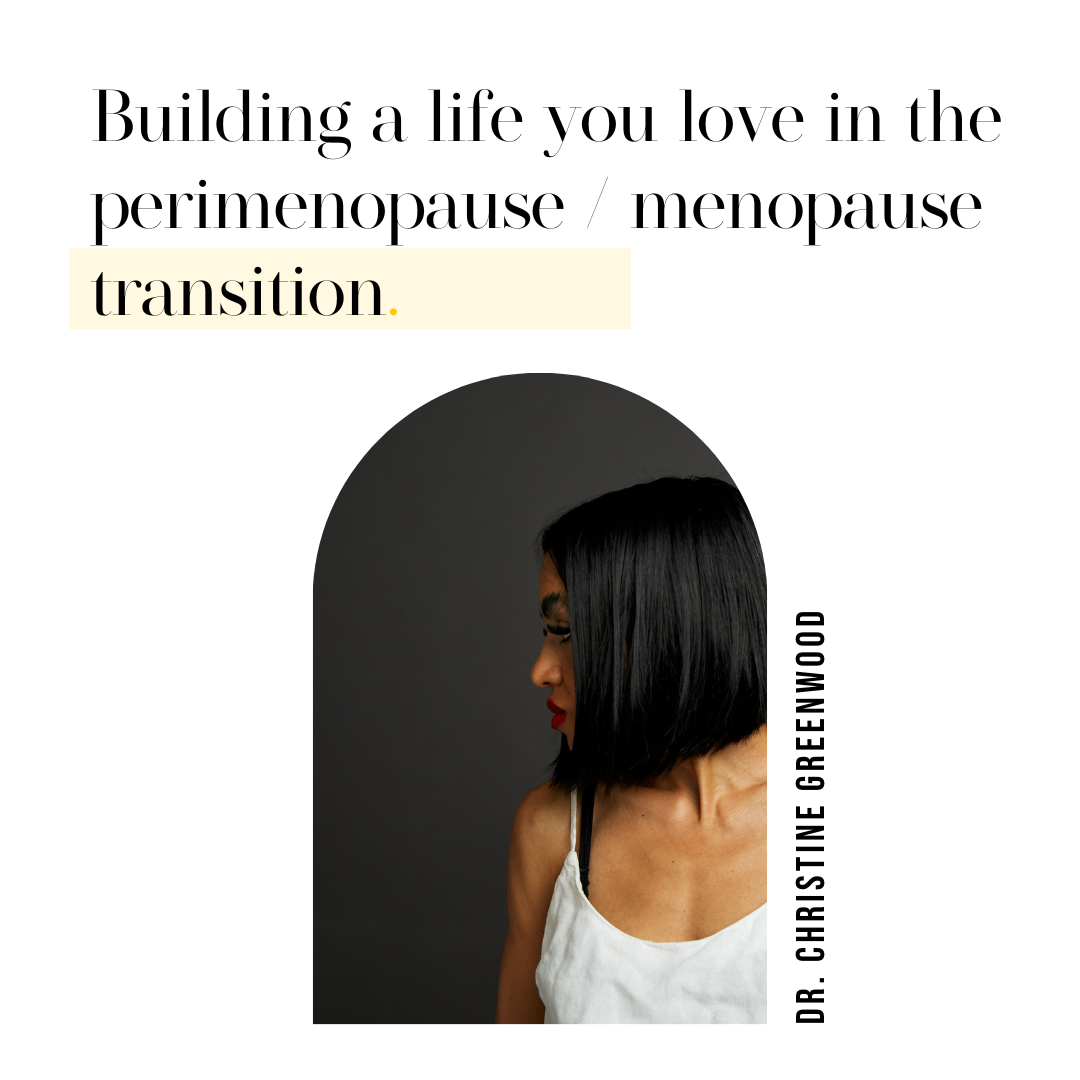
Building a life you love in the perimenopause / menopause transition

By Menopause

Dr's Orders Square (4)


The majority of the women I see are in the perimenopause / menopause season of life. I thought I would write a few pointers that hopefully help in this often discombobulating time of one’s life. If you’re exhausted, irritable as F#@!, full of rage, apathetic, experiencing weight gain, and don’t know what to do or where to start, you are not alone! Here are 6 tips to get you started.

1. Arm yourself with knowledge

Knowledge is power. I have posted two of my favourite resources for you to look at on my instagram (@drchristinegreenwood). Two very experienced doctors to follow are Dr Louise Newson and Dr Mary Claire Haver. These women are leaders in the field and have devoted their lives to empowering others in this space. I know personally they have absolutely changed the way I practice. Read and learn about this new transition in life. Learn about the symptoms, the signs, the treatment and this will help empower you with the knowledge to make changes and decide whether certain management is right for you when you see the health professionals.

2. Consider Menopause Hormonal Therapy (MHT)

As your hormones swing in perimenopause and then steadily decline, then drop in the menopause time, your moods may wildly swing or dip into apathy and depression. You may feel intense rage, your relationships may suffer, your libido may drop, and other physical signs like hot flushes, palpitations, Genitourinary symptoms and joint pain. Many of these symptoms will respond well to MHT. Talk to your doctor about whether this is an option for you.

For the majority of women, the benefits outweigh the risks.

3. Exercise

Start to move your body. Now I know you are most likely tired, especially if you are perimenopausal, but exercise will give you energy and at this time in your life it is one of the MOST important things you can do for your health. Aim for 150 mins of cardio a week. That sounds like a lot but it’s doable if you break it down. This is as simple as three 45 mins sessions of cardiovascular exercise a week. This can look like fast walking (when it’s hard but not impossible to hold a conversation), bike riding, swimming, rowing, the list goes on. Start with walking and go from there. Choose something you enjoy, and hopefully even look forward to. If you don’t yet, you will as you form the habit! The other important thing is weight training. Building in some resistance training at least two times a week. Build those muscle ladies! Your muscle mass decreases at this time. We want to build it to maintain your metabolism and strength.

4. Diet

At this time you may feel completely worn out. And all you want to do at night sometimes is fall face first into a pile of salty chips, lucious Tim Tams, or whatever your treat of choice is. But trust me, once again you will feel SO much better if you intentionally look at your nutrition as a way to love your body. Think protein with every meal, at least 30g of fibre (I will write more about this at another time), put as many vegetables as possible into every meal, and at least two pieces of fruit a day.  Doing this will help to limit your intake of processed sugars. My motto is focus on what to add in, not what to cut out (more on this later too).

5. Avoid or cut out alcohol

I have seen SO many perimenopausal and menopausal women fall into the habit of using alcohol for a fix when they feel terrible. Slowly, it creeps in and it becomes a crutch. There is no judgement here! You are not alone. The sooner you cut it out the better! Plus, it totally disrupts your sleep. Also if you’re aiming for some weight loss, alcohol consumption is one of the worst things you can do to sabotage this. If you need help with this see a doctor, there are lots of aids and sometimes even medication that can help with this.

6. Take ownership!

At the end of the day NO ONE can take ownership of your health but you. I get it. This time of life can be one of the hardest transitions. But if you make a decision to make it a turning point in your health, it can be a really empowering and life changing space. A time where you put your health first. A time where you build on physical strength and nourishment. A time where you intentionally heal your relationships. A time where you address hormone imbalances. A time where you re-evaluate what is important in life and focus on these things. A time where you make a decision that while aging is unavoidable, aging well can be something you can control. Get into the best health physically, mentally, and emotionally, as you can possibly be.

Remember


I am proud of you. I believe in you. And I pray that on this journey you find a community of women to support you, the treatment you need and the strength and courage to put your health first and build a life that you love.


Follow Dr Greenwoods Instagram page for more information